The different types of water to analyse
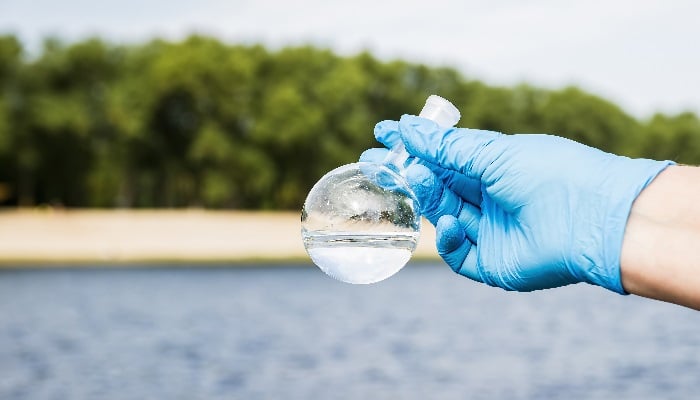
1. Freshwater
Freshwater is water intended for human consumption. This includes all water, either in its natural state or after treatment, intended for drinking, cooking, food preparation or production, or other domestic uses, in public as well as private places, whatever its origin, whether the water is supplied through a distribution network, from a tanker truck or tanker boat, or, in the case of spring water, bottled. This also includes all water used in food businesses for the manufacture, processing, preservation or marketing of products or substances intended for human consumption, which may affect the wholesomeness of the final foodstuff, including food ice of water origin.
A distinction is therefore made between:
– Distribution water (tap water, etc.)
– Production water (borehole water, well water, etc.)
– Resource water, including raw groundwater and surface water (river water, lake water, etc.) classified by group according to their treatment:
* Group A1: simple physical treatment and disinfection;
* Group A2: standard physical and chemical treatment and disinfection;
* Group A3: intensive physical and chemical treatment, refining operations and disinfection.
The order of 11 January 2007 sets out the quality limits and reference values applicable to water intended for human consumption. To consult it: https://www.legifrance.gouv.fr/affichTexte.do?cidTexte=JORFTEXT000000465574
2. Bottled water
– spring water is groundwater that is microbiologically safe and protected against the risk of pollution.
– natural mineral water can only be of underground origin and must have formed protected from any risk of pollution. Microbiologically safe from its source, it is protected from any human pollution and undergoes no
This water may be subject to specific labelling (rich in mineral salts, suitable for preparing infant food, etc.)
The order of 14 March 2007 sets out the quality criteria applicable to packaged water. To consult it: https://www.legifrance.gouv.fr/affichTexte.do?cidTexte=JORFTEXT000000274485&categorieLien=id
– carbonated water.
3. Recreational water
The order of 7 April 1981 (amended by the order of 22 January 2002) sets out the technical provisions applicable to swimming pools. To consult it: https://www.legifrance.gouv.fr/affichTexte.do?cidTexte=JORFTEXT000000409530&categorieLien=id
4. Domestic hot water
Legionella monitoring in domestic hot water systems is regulated by the order of 1 February 2010: https://www.legifrance.gouv.fr/affichTexte.do?cidTexte=JORFTEXT000021795143&categorieLien=id
5. Cooling tower water
Legionella monitoring in cooling tower water is regulated by the order of 14 December 2013: https://www.legifrance.gouv.fr/affichTexte.do?cidTexte=JORFTEXT000028375083&categorieLien=id
Phytocontrol holds the national approval of the Ministry of Health for carrying out sampling and analyses for the sanitary control of water, and the approval of the Ministry of the Environment for the analysis of freshwater.
The Phytocontrol laboratory is able to quantify various regulated parameters in all these types of water. For any further technical or regulatory information, please contact us.

