New COFRAC accreditations for complex matrices

Always at the forefront of technology, the recent renewal of its analytical equipment with the latest generation devices (LC-MS/MS, GC-MS/MS, LC-QTOF…) allows Phytocontrol to extend its scope of accreditation for pesticide analyses on complex matrices.
The laboratory is thus extending its pesticide screenings on complex matrices to over 600 active substances, including newly accredited residues, while maintaining its commitments to reliability and responsiveness.
Perfume, aromatic and medicinal plants
PPAM (Perfume, aromatic and medicinal plants) represent more than 150 plant species and over 500 product references. PPAM are used in the food, cosmetics and food supplement sectors, among others.
These are extremely complex matrices to analyse due to their very high concentration, which creates far more interference than with standard matrices. Only a few expert laboratories are capable of carrying out this type of service.
Phytocontrol laboratory is able to analyse and quantify a wide list of 600 pesticide residues, some of which are accredited, using a high-performance method based on the latest generation LC-MS/MS technology.

Spices

Spices are generally of plant origin. They are characterised by their smell and colour. They are used in cooking as a preservative, colourant or seasoning.
As complex matrices, spices have a high content of pigment and aromatic compounds, which generates interference and makes interpretation of results more difficult. Phytocontrol has developed a new method to become accredited for spices by using the latest generation of analytical technologies. The laboratory is thus able to detect more than 600 pesticide residues, some of which are accredited.
Essential oils
Essential oils, due to their nature, concentrate certain natural or chemical compounds, including pesticide residues.
These matrices, which generate a lot of interference, present well-known analytical challenges in terms of detection and quantification.
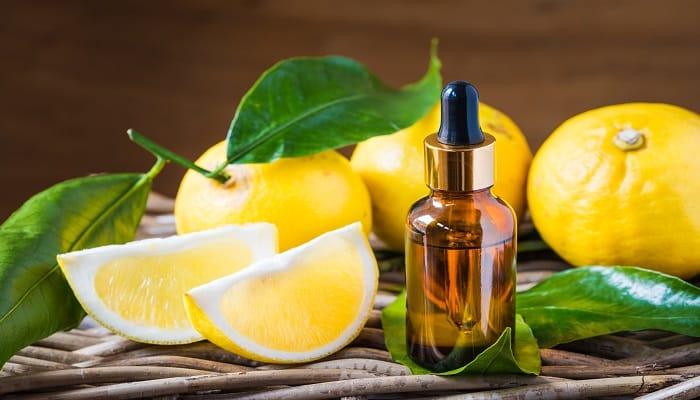
Phytocontrol laboratory is able to determine a wide list of 480 pesticide residues, using an ultra-high-performance LC-QTOF method combined with GC-MS/MS multi-residue screening. Thanks to the performance of its R&D department, two essential oil matrices are now analysed under COFRAC accreditation: orange and lemon.
For any technical, commercial or regulatory information, please contact your nearest regional office.

