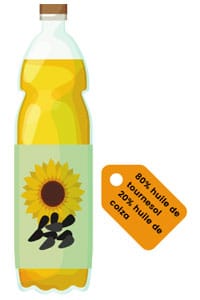
Adulteration of vegetable oils

Phytocontrol, an expert in food authenticity, is able to interpret adulteration in edible vegetable oils.
Europe is the world’s leading consumer of vegetable oils. Vegetable oil consumption reaches 10 million tonnes, of which 800,000 tonnes in France. The most widely consumed oils are sunflower oil, olive oil, blended oils and rapeseed oil.
Since the COVID crisis and the war in Ukraine, the risks of fraud involving edible vegetable oils have clearly increased. Some oils may be adulterated by the addition of lower-quality oils, while others may be contaminated with chemicals or microorganisms hazardous to health.
Vegetable oil labels can be misleading or inaccurate, which can lead consumers to buy lower-quality or non-compliant oils. Some producers or suppliers may fail to comply with standards for the production of edible vegetable oils, which can pose risks to consumer health.
The Phytocontrol solution
To detect deception in your edible vegetable oils, Phytocontrol offers, in addition to the Fatty Acid Profile analysis, interpretation of adulteration in single edible oils, which validates or invalidates the oil or a blend of two oils.
Our laboratory performs this analysis on the following oils: mango kernel, amaranth, peanut, argan, avocado, oat, sea buckthorn berry, cocoa butter, shea butter, borage, camelina, safflower, hemp, chia, rapeseed, copra, crambe, cumin, black cumin, Cuphea ilavea, Cuphea leptopoda, fenugreek, wheat germ, sea buckthorn seed, cottonseed, white mustard seed, linseed, lupin, corn, hazelnut, walnut, coconut, macadamia nut, pili nut, olive, evening primrose, palm, palm kernel, blackcurrant seed, melon seed, watermelon seed, grape seed, perilla, pistachio, purslane, glasswort, buckwheat, sesame, soybean, sunflower.
Need technical, regulatory or pricing information? Our customer service is available from 8am to 7pm, Monday to Friday.
And to keep up with all Phytocontrol news, join us on our LinkedIn and Facebook pages!