Regulation (EC) No 396/2005 sets maximum residue levels for pesticides in human and animal food.
Pesticide residues

Why test for
pesticide residues?
Pesticides encompass a range of active substances, natural or synthetic, designed to eliminate or control pests affecting plants and animals. They include herbicides, fungicides, insecticides, acaricides, growth regulators and repellents.
Residue analysis measures the remaining amount of these substances in a food matrix.
Maximum residue levels (MRLs) are the highest levels of pesticide residues allowed in an unprocessed product intended for human or animal consumption. These regulatory limits are expressed in mg/kg and set for each pesticide-matrix pair. They are determined based on good agricultural practices and the principle of minimal consumer exposure, in order to protect the most vulnerable populations. They are established following a comprehensive assessment of the active substance’s properties and intended uses of the pesticide.

CONTROL PLAN
Our expertise in pesticide analysis
20
Over 20 years of expertise in our core business, reflecting our analytical excellence in pesticide residues.
500
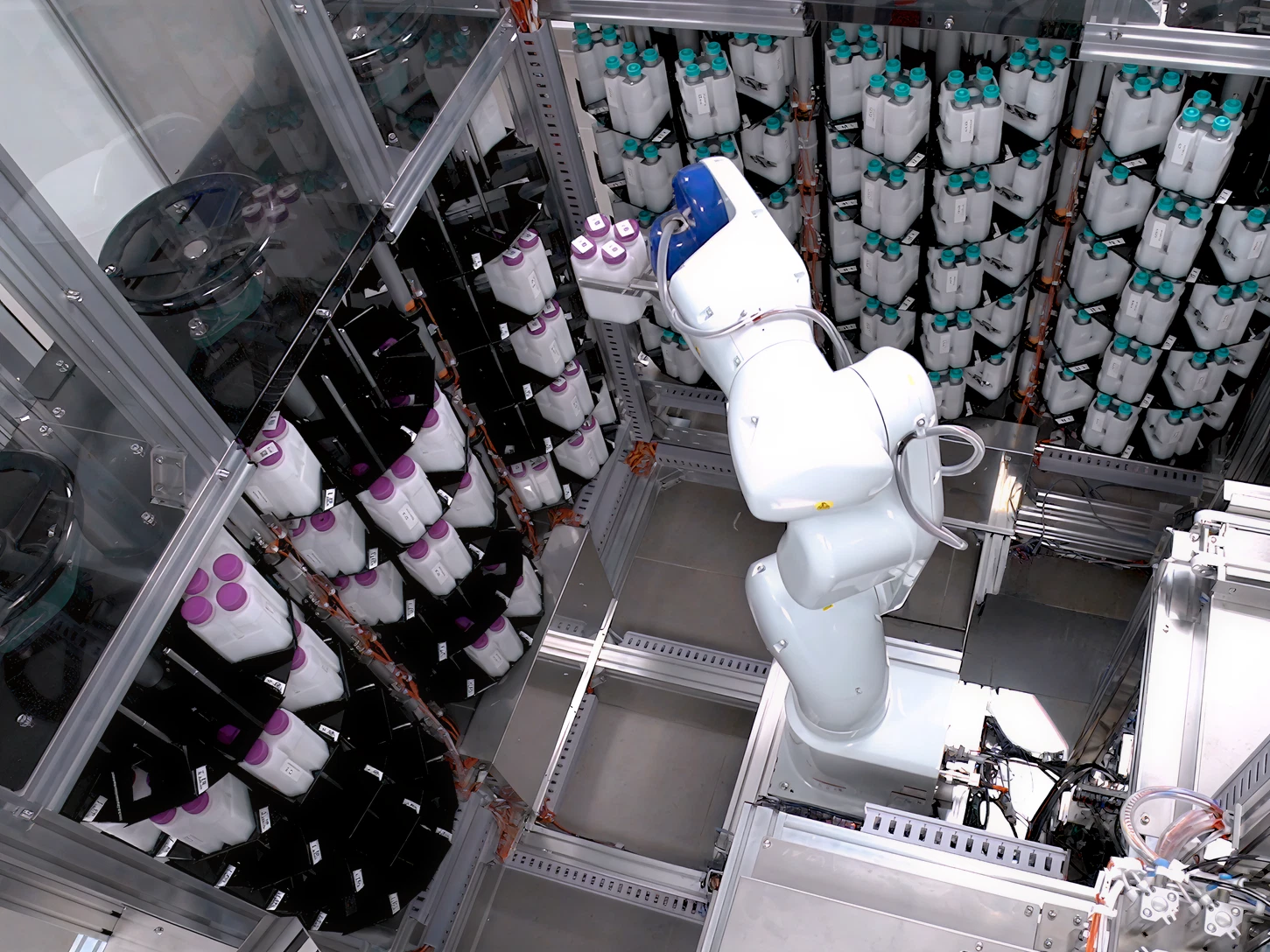
A state-of-the-art technology park of over 500m² dedicated to pesticide analysis, reflecting our ability to handle large volumes with a high level of control.
800
Screening and quantification of over 800 molecules using complementary analytical methods, ensuring compliance with regulatory requirements.
90000
Over 90,000 samples tested for pesticide residues in 2025, illustrating the robustness of our processes and the scale of our activity.
Phytocontrol mainly uses analysers coupled with tandem mass spectrometry detectors (GC-MS/MS and LC-MS/MS). To meet specific analytical needs or matrices, the laboratory also relies on a complementary equipment park integrating various detection technologies, such as GC-MS with Headspace, SBSE or SPME, LC-MS/MS QTrap, GC-MS/MS Ion Trap, and LC-QTOF.
- Multi-residue analysis by GC-MS/MS & LC-MS/MS screening covering more than 750 active substances and their metabolites.
- Single-residue analysis available for 50 active substances which, due to their chemical properties, require a specific quantification method. This is notably the case for growth substances and fumigation products.
- Customised analyses according to “your own specifications or crop management itinerary”.
screening
How are
our screenings built?
Thanks to the monitoring of regulatory texts carried out by our Regulatory Watch department, our screenings are regularly updated according to:
- Changes to residue definitions: addition or removal of a metabolite in the definition. The change is made on the date the regulation initiating the modification comes into force.
- New molecules approved or under approval in the EU.
- MRL decreases: some fall below the standard LOQ of 0.01 mg/kg. Tests are then carried out to lower our LOQ below the MRL (e.g. Fipronil).
- A specific customer request (addition of a molecule).
EXPERTISE
Which pesticides do we analyse?
Among the 800 active substances screened for in multi-residue and single-residue analyses,
here is a non-exhaustive list:
- Amitraz
- Azadirachtin
- BAC & DDAC (quaternary ammonium salts)
- Phosphine, 1-MCP 1-Methylcyclopropene
- Captan, Tetrahydrophthalimide (THPI)
- Chlorates
- Chlordecone
- Dithianon
- Dithiocarbamates (CS2) and dithiocarbamates by family
- Ethephon
- Fipronil
- Flonicamid
- Fluazifop, Quizalofop
- Fosetyl aluminium and phosphorous acid
- Glyphosate and AMPA, Glufosinate, Sulfosate
- Maleic hydrazide
- Matrine
- Nicotine
- Inorganic bromides
- Organotins
- Ethylene oxide
- Paraquat, Diquat, Chlormequat, Mepiquat
- Piperonyl Butoxide
- Thiram
QUALITY
Our accreditations
Phytocontrol is accredited by COFRAC according to LAB GTA26 (programme 99.2) for pesticide screening in fatty and non-fatty products of plant and animal origin, including human, infant and animal food.

Testimonial
How do we help Stéphane,
an organic producer, certify the compliance of his batches?

As an organic farmer, Phytocontrol supports me in validating my batches and ensuring the absence of pesticide residues. Thanks to their reliable analyses, I can be sure that my products meet organic specification requirements and that my customers trust the quality of my crops.
Beyond analysis
Our training courses
Recommended training courses
Discover 2 key training courses to quickly boost your skills
-
Contaminant analysis
-
Good environmental sampling practices
Questions about our analyses or your project?
Our advisers respond within 24 hours. Tell us what you need.
SECTORS
Products affected by pesticide residues
Phytocontrol supports and advises all players in the conventional food, organic farming, baby food, cosmetics and pharmaceutical sectors.

Wines & Spirits

Cereal products

Fruit & Vegetables

Oilseeds & Oleaginous fruits / Oils

Spices, teas, herbal infusions

Dairy, meat, seafood & egg products

Bee products

Processed foods

Plant extracts, essential oils, PPAM (perfume, aromatic and medicinal plants)

Juices & Beverages

Infant food
